


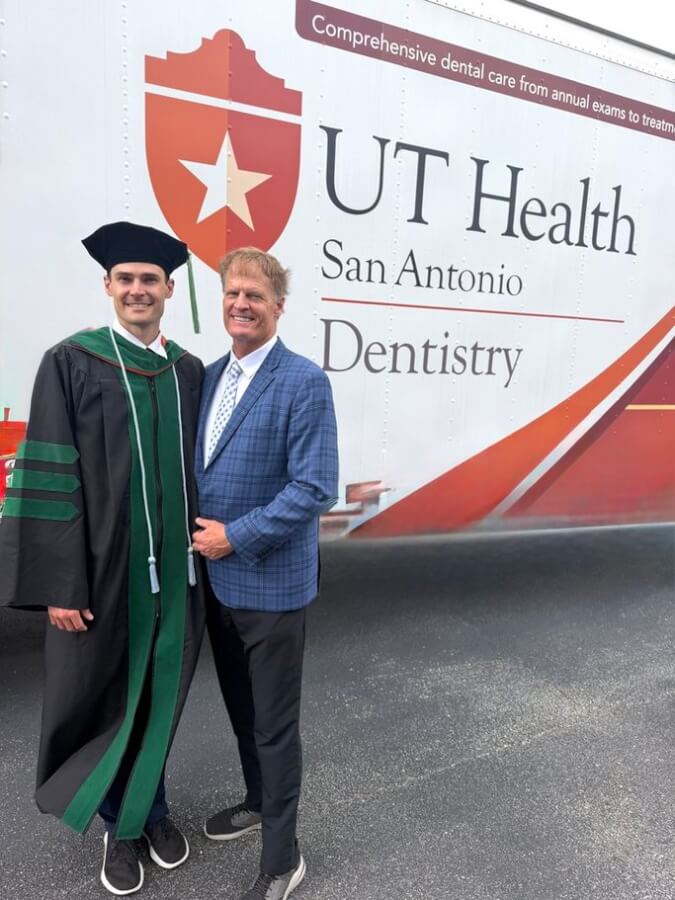
A study published in April, in the Journal of Dental Anesthesia and Pain Medicine, led by Greg Tuttle, DDS, explores an emerging approach to delivering local, fast-acting dental anesthesia while reducing the lingering numbness often associated with traditional techniques. The research team included University of Texas at San Antonio (UT San Antonio) students Jared J. Tuttle, Greg Tuttle’s son, from the School of Dentistry, and Carter K. Newell from the Joe R. and Teresa Lozano School of Medicine, as well as LaDawn Boucher and Jill Taylor.
Real data, real impact
The study examined clinical data from a private dental practice in Utah, giving the students insight into how research and real-life patient care can inform one another.
“It was interesting to see how private practice and research can complement each other,” Jared Tuttle said. “Each has unique strengths that, when combined, can lead to innovative solutions for patients.”
Newell said real-world data comes with both limitations and opportunities.
“You don’t always have perfect data to answer every question, but you can still take meaningful steps toward improving care with the information available,” Newell said.
What they found
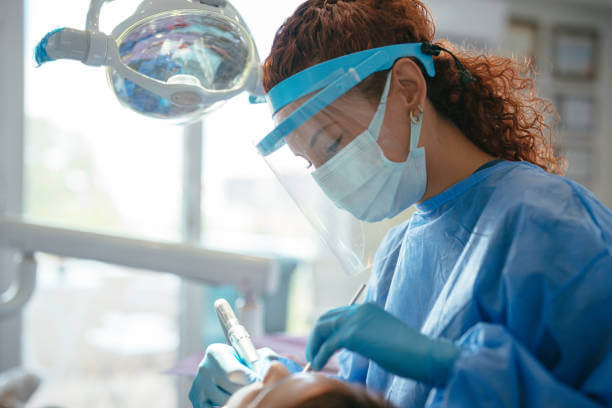
The study’s findings point to the potential for a shift in how dental anesthesia is delivered. The team found the anesthesia delivery method — which uses an angled, thin needle to deliver an injection directly into the bone cavity— resulted in near immediate numbness, effective pain control with fewer injections, reduced pain during the procedure and targeted numbness that affected less surrounding area compared to the traditional approach.
The intraosseous technique shows promise as a primary modality in cases that are more difficult to anesthetize, such as treatment in the lower molars.
Learning by doing
For Jared Tuttle, the project began with an opportunity to apply his interest in research to real-world clinical data.
“As a medical student with a strong background and interest in research, I was excited when I heard about the project,” he said. “Our role was to receive the data, analyze it and frame it within the context of the current literature.”
Working alongside him was Newell, who was seeking hands-on experience.
“I was looking for exposure to research, and this was a tremendous opportunity,” Newell said. “I helped analyze the data, developed the research question and worked through the literature to make sure our findings were clear and understandable.”
From the classroom to the clinic
Both students said the experience revealed how research works beyond the textbooks.
“This project showed how initial ideas are refined when you face the realities of data collection and analysis,” Jared Tuttle said.
For Newell, the process brought a new appreciation of the research lifecycle from concept to publication.
“There are many challenges along the way,” he said. “That is a valuable experience when you are evaluating studies and applying evidence in clinical practice.”
Confidence in evidence-based care
Participating in the study gave the students a deeper understanding of evidence-based dentistry and medicine.
“I think research can feel intimidating, but through collaboration, we were able to leverage everyone’s strengths and produce meaningful evidence that can inform everyday clinical practice,” said Jared Tuttle.
Newell learned that seemingly small findings can make a big difference in improving healthcare quality and patient experience.
“There are different levels of evidence, and each contributes to the bigger picture,” he said. “Our study shows promise, but it also points to the need for continued research.”
Student research matters
Experiences like this are central to UT San Antonio’s mission of integrating academics, research and healthcare.
“This experience captures how the missions of UT San Antonio are intertwined,” Newell said. “As a student, I was eager to learn more about the research process and how patient outcomes could be improved. The study shows how UT San Antonio is working to advance the field of dentistry by challenging the status quo and evaluating promising technologies in a rigorous, evidence-based manner.”